A practical walk-through of NDIS sole trader registration: the registered-versus-unregistered decision, what the process actually involves, what it costs, and a PRODA deadline worth knowing before you start.
If you’re starting NDIS sole trader registration, the first thing worth knowing is that most of what you’ll read online treats registration as a single fixed process. It isn’t. Whether you register at all, and which audit pathway you go through if you do, both depend on decisions you make early. Getting those decisions right before you start saves real time and money later.
One more thing worth knowing before you begin: your identity access to the NDIS Commission’s systems now runs through myID, not the older PRODA system. PRODA is being phased out. More on that below, since the timing matters.
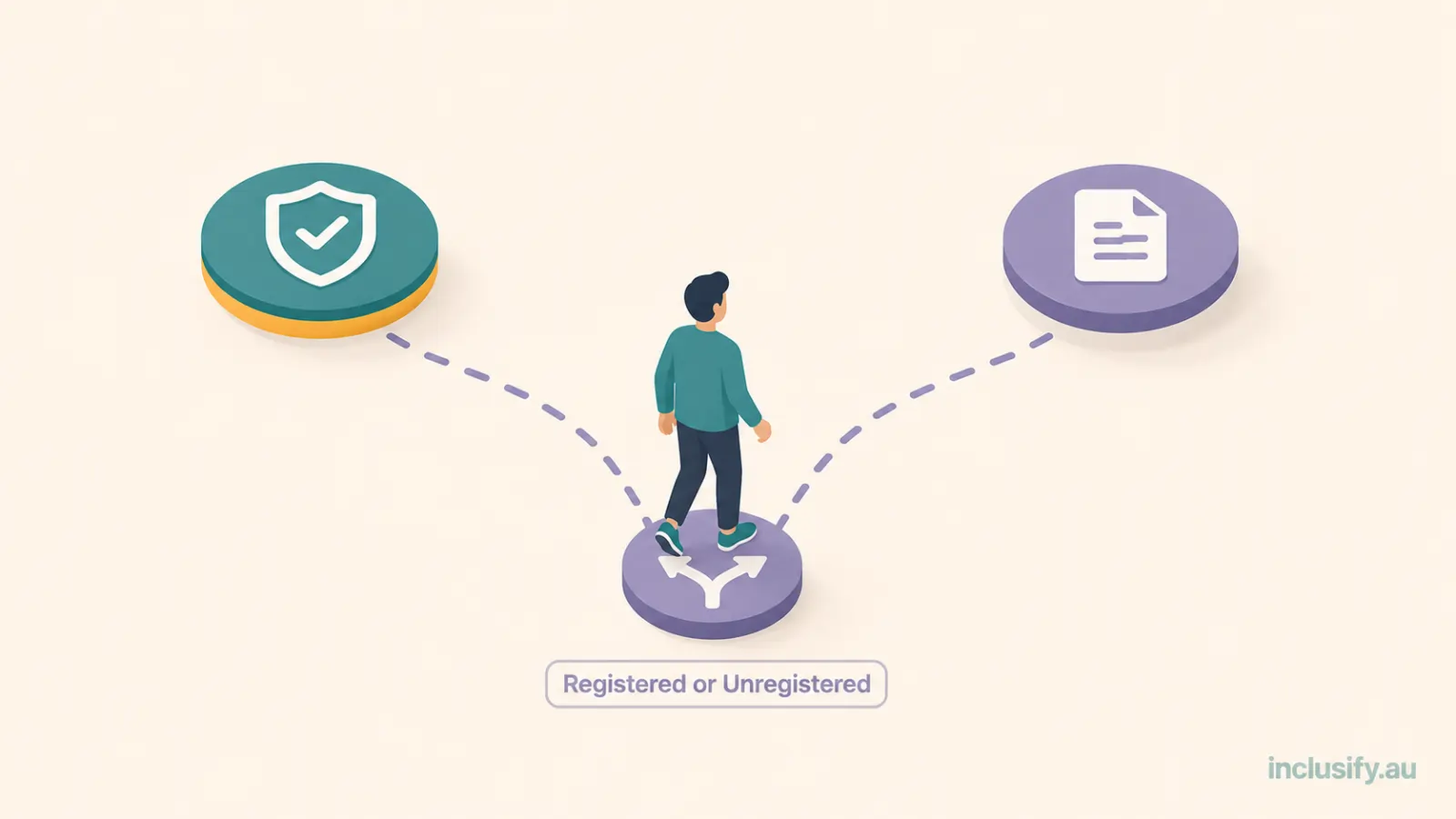
Registered or unregistered: decide this before anything else

The single most consequential decision in this whole process is whether to register at all, and it isn’t really a compliance question first. It’s a question about who you want to be able to work with.
The NDIS Commission is clear that unregistered providers can deliver supports and services to participants, except for a specific list of higher-risk or specialised supports. Only participants who self-manage or plan-manage their funding can choose an unregistered provider; participants whose funding is NDIA-managed can only use a registered provider.
So the practical question is: are you planning to work only with self-managed and plan-managed participants, or do you want access to NDIA-managed participants as well? If it’s the former, unregistered status is a legitimate, faster, lower-cost way to start. If it’s the latter, registration isn’t optional, it’s the price of entry.
There’s a middle path worth knowing about too. Many sole traders start unregistered to test demand and build a caseload, then register once they have a clearer sense of their business and want access to the wider NDIA-managed market. Registration doesn’t erase what you’ve built unregistered; it expands who you can work with.
Setting up the business layer first
Before any NDIS-specific step, you need the basic business structure in place: an ABN registered as a sole trader, and GST registration if your turnover requires it. This isn’t NDIS-specific paperwork, it’s standard business setup through the Australian Business Register, and it’s worth having sorted before you touch the NDIS Commission’s systems, since your application will ask for it.
Identity verification is changing: PRODA is being retired
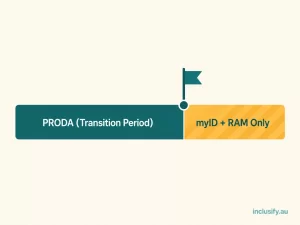
Historically, access to the NDIS Commission’s portals ran through PRODA (Provider Digital Access). That’s changing. The Commission has confirmed that providers will continue accessing its portals through PRODA only during a transition period, and that this transition is scheduled to end on 30 September 2026. After that date, PRODA access to the Commission’s portals is removed.
What replaces it is myID, the Australian Government’s digital identity app, used together with the Relationship Authorisation Manager (RAM) to link your verified identity to your business. As a sole trader, this applies to you a little differently than it does to a larger organisation.
The Commission specifically notes that sole traders are treated as both a worker and a business when it comes to myID. You need to set up your personal myID account, then separately authorise that account to represent your business through RAM.
At time of publishing, this deadline is about a month away. If you’re starting your registration application now, set up myID and RAM first, rather than starting with PRODA and having to redo the identity step partway through.
NDIS Sole Trader Registration: The Process Step by Step
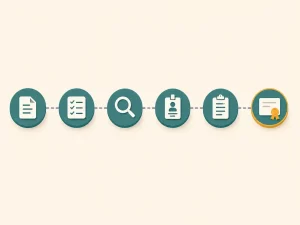
Once you’ve decided to register and have myID set up, the process itself runs through the NDIS Commission’s Applications Portal.
- Apply through the Commission portal. You’ll provide your business details, ABN, key personnel information (as a sole trader, that’s you), and the registration groups covering the supports you want to deliver.
- Complete a self-assessment. Against the NDIS Practice Standards relevant to your chosen registration groups, with supporting evidence for how your business meets each one.
- Receive your Initial Scope of Audit. The Commission sends this after your application, confirming whether you need a verification or certification auditand what evidence your auditor will assess.
- Engage an approved quality auditor yourself. This is a genuinely important detail: the audit is not conducted by the Commission. You choose and pay an independent approved quality auditor from the Commission’s public list, and it’s worth getting quotes from more than one before committing.
- Complete the audit. A desktop review of your documentation for a verification audit, or a more involved two-stage assessment, including evidence of implementation, for a certification audit.
- The Commission reviews the outcome. Alongside a suitability assessment of you as key personnel, before making a registration decision and issuing a certificate of registration if approved.
Verification or certification: which one applies to you
The NDIS Commission draws this distinction clearly: a verification audit applies to lower risk, lower complexity supports and services, while certification applies to higher risk or more complex supports. Many providers who need only a verification audit are already covered by professional regulation elsewhere, such as Allied Health practitioners registered with AHPRA.
You don’t get to choose your pathway. The Commission’s Initial Scope of Audit tells you which one applies, based on the registration groups you’ve nominated. This is exactly why it’s worth being deliberate about which registration groups you actually need at the outset, rather than selecting broadly and triggering a more demanding audit than your business requires.
What NDIS sole trader registration actually costs

Here’s the part most guides get vague about, so it’s worth being precise. The NDIS Commission does not charge a fee to submit your registration application. Your real cost is the independent quality audit, which you arrange and pay for directly.
Crucially, the Commission does not set or publish audit prices. Approved quality auditors are private businesses and price their own services based on the size and complexity of your application. That means any specific dollar figure you see quoted online, including ranges published by compliance consultancies, is a market estimate from that source, not an official Commission figure.
The practical approach: once you receive your Initial Scope of Audit, request quotes from at least two or three approved auditors before committing to one. Costs vary meaningfully by auditor, and for a straightforward sole-trader verification pathway, comparing quotes is genuinely worth the extra week it takes.
Beyond the audit, budget for insurance and worker screening, both of which are addressed below, and factor in your own time if you’re preparing policy and evidence documentation yourself rather than engaging a consultant.
Insurance isn’t optional, it’s a Practice Standards requirement

It’s easy to think of insurance as sensible business practice you’ll sort out eventually. For a registered NDIS provider, it’s more than that. The NDIS Practice Standards themselves specify that appropriate insurance is in place, including professional indemnity, public liability and accident cover, as part of the governance requirements your auditor assesses.
In practice, that means your auditor will ask to see evidence of current cover, and gaps here aren’t a minor administrative note, they’re a governance finding. Even if you’re operating unregistered, most plan managers, support coordinators, and participants will expect to see proof of insurance before engaging you. Treating it as day-one setup rather than an afterthought serves you either way.
Worker screening as a sole trader
Worker screening obligations differ by registration status, and it’s worth understanding precisely rather than guessing. The Commission is explicit: self-employed or sole trader registered providers are both key personnel and working in a risk-assessed role. A clearance is mandatory before you can register. It’s not something you can defer until after you’re operating.
If you’re staying unregistered, the Commission recommends but does not legally require worker screening. Many participants and plan managers will still expect to see one, so it’s worth applying for regardless of whether registration makes it mandatory for you.
A quick decision checklist
Bringing this together, here’s what to work through before you submit anything.
- Confirm which participant funding types you want to work with. NDIA-managed means registration is required; self-managed and plan-managed give you the choice.
- Set up your ABN and GST registration if applicable, before touching NDIS-specific systems.
- Set up myID and RAM now rather than starting with PRODA, given the 30 September 2026 transition deadline.
- Apply for your NDIS worker screening clearance early. It’s mandatory before registration and takes time to process.
- Arrange public liability and, if relevant to your services, professional indemnity insurance before your audit, not during it.
- Once you have your Initial Scope of Audit, get quotes from at least two or three approved auditors rather than accepting the first one.
- Choose your registration groups deliberately. They determine your audit pathway and the scope of what an auditor will assess.
Once you’re set up: what comes next
Registration and insurance get your business legally ready to operate. What actually runs your day-to-day is a separate decision: participant records, service agreements, compliant invoicing, and keeping on top of your own compliance dates. It’s worth making that choice deliberately, rather than defaulting to whatever spreadsheet and folder system got you through the application.
We’ve written a companion guide walking through exactly that decision, what a sole trader actually needs from software versus what you can safely skip until you grow, which we’ll link here once it’s live. If you already know you’ll be bringing on a second worker or subcontractor as you scale, it’s also worth reading Best Payroll Software for NDIS Providers with Complex Awards early. SCHADS Award obligations are a different problem once you’re paying wages rather than invoicing as an individual.
And Inclusify’s platform is built to let you turn on the compliance and funding modules relevant to a one-person operation, without paying for the features of a much larger organisation.